ADHD Testing for Preschoolers: Is It Too Early?


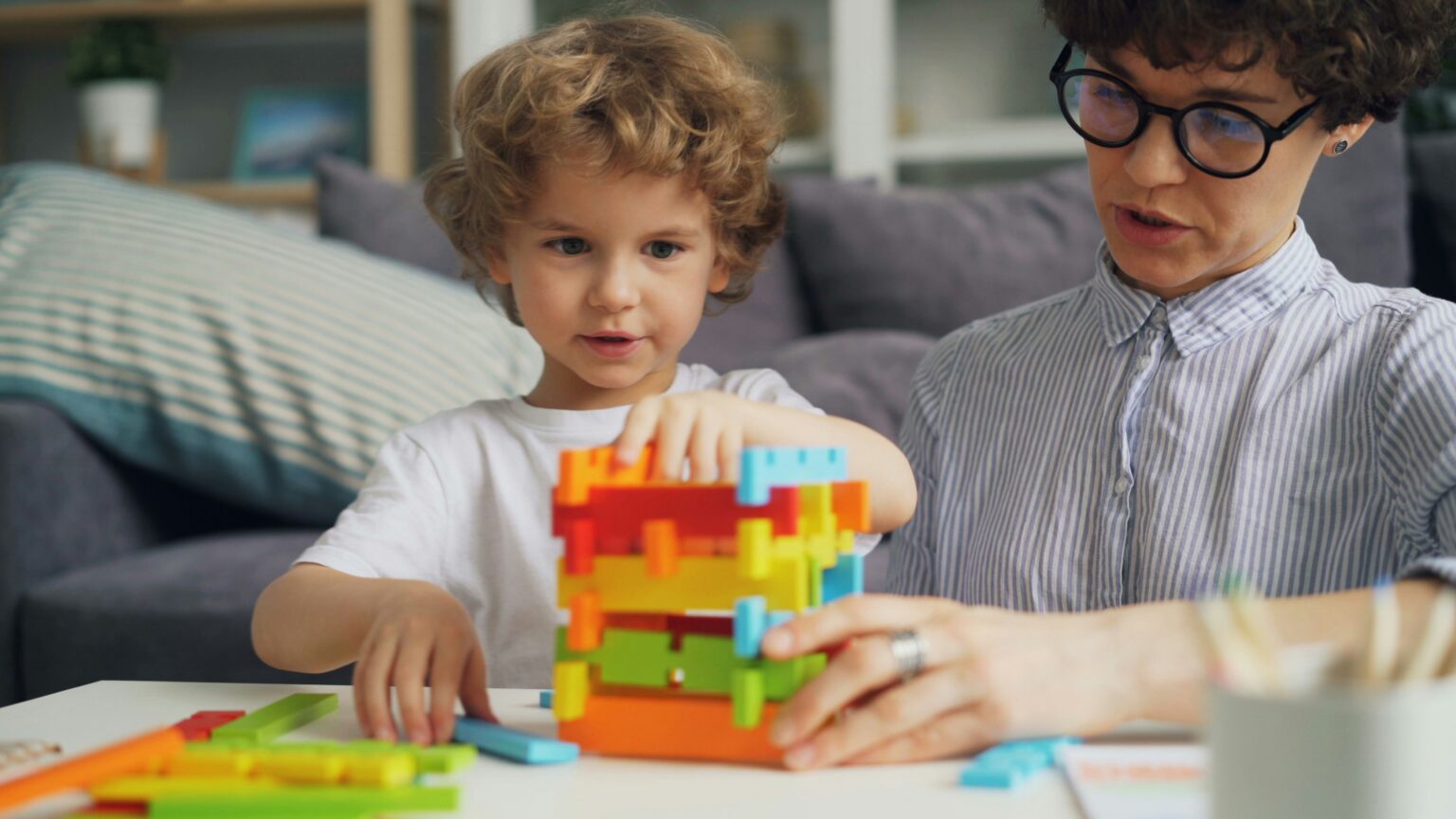
A three-year-old who cannot sit through circle time is not automatically a child with ADHD. Neither is a four-year-old who climbs furniture, talks nonstop, or melts down when asked to stop playing. Preschoolers are, by definition, still learning how to manage impulses, shifts in routine, and big feelings in small bodies. That is what makes the question of ADHD testing at this age so difficult, and so important.
Parents often arrive at this question from opposite directions. Some are worried that their child is struggling more than peers and do not want to lose valuable time. Others fear that normal preschool behavior will be pathologized, especially in active, curious children. Both instincts are reasonable. The real task is not to rush toward a label or to avoid one at all costs. It is to figure out whether a child’s behavior falls within a broad range of typical development, or whether it signals a pattern of impairment that deserves a closer look.
In clinical practice, early childhood educators, pediatricians, psychologists, and developmental specialists tend to agree on one central point: preschool is not too early to evaluate concerning behavior, but it is early enough that the evaluation must be done carefully. The difference between a thoughtful developmental assessment and a casual assumption matters a great deal.
What ADHD looks like before kindergarten
ADHD in preschoolers rarely presents as a neat checklist. It usually shows up as a pattern that repeats across settings and causes real disruption. A child might dart away in parking lots despite repeated teaching, bounce from one activity to the next without settling, interrupt constantly, seem unable to wait even a few seconds for a turn, or become so disorganized during group routines that they cannot participate meaningfully.
The key issue is not whether a child is energetic. Many healthy preschoolers are energetic. The question is whether their attention, activity level, and impulse control are consistently out of step with what is expected for their developmental stage. That distinction sounds simple, but in real life it takes judgment.
A four-year-old who wiggles through story time may be acting exactly like a four-year-old. A four-year-old who cannot remain seated for even a few bites at family meals, runs from adults in public, disrupts every group activity at school, and has frequent injuries because of impulsive behavior may be showing something more significant. The difference lies in intensity, frequency, context, and impact.
That last word, impact, matters most. Clinicians do not diagnose ADHD because a child is inconvenient, loud, or spirited. They look for evidence that symptoms interfere with learning, relationships, safety, family life, or the child’s ability to function day to day.
Why preschool years create so much confusion
Preschool development is uneven by nature. Children mature at different rates. A https://www.google.com/maps?cid=8435893249121239844 child may have advanced language and weak emotional regulation. Another may sit quietly in class but become explosive at home after holding it together all morning. Sleep, temperament, sensory sensitivities, anxiety, language delays, trauma, hearing problems, and autism can all affect behavior in ways that overlap with ADHD.
This is one reason casual ADHD testing based on a short office visit is not enough. A child who appears distractible might actually be missing directions because of a hearing issue. A child who cannot stay on task might be frustrated by a language processing problem. A child who seems oppositional may be overwhelmed by transitions or sensory demands. Preschool behavior is full of diagnostic look-alikes.
There is also the issue of environment. Some preschool classrooms expect long periods of sitting, advanced pre-academic work, and constant group compliance. That setup will expose the weak spots of almost any young child, especially one with high activity needs. On the other hand, a flexible play-based classroom may mask meaningful struggles that become obvious only later, when demands increase. Context shapes what adults notice.
Is there an official age for diagnosis?
Yes, ADHD can be diagnosed in children as young as four under established diagnostic guidelines, provided the symptoms are persistent, developmentally inappropriate, present in more than one setting, and causing impairment. That does not mean every concerning preschooler should receive a diagnosis. It means the door is open when the pattern is strong enough and the evaluation is rigorous enough.
For children younger than four, clinicians are generally more cautious. Development is changing so rapidly that a formal ADHD diagnosis is harder to make with confidence. Still, concerns should not be brushed aside. A three-year-old with severe impulsivity, aggression, constant motion, poor sleep, and inability to participate in basic routines may not yet receive a firm label, but that child still deserves assessment and support.
The practical question for families is often less about the label itself and more about what help becomes available once concerns are documented. Early intervention services, parent coaching, school accommodations, developmental evaluations, and behavior supports can begin before or without a definitive ADHD diagnosis.
What good ADHD testing for a preschooler actually involves
When parents hear the phrase ADHD testing, they sometimes imagine a single test that gives a yes or no answer. That is not how it works, especially for preschoolers. There is no blood test, brain scan, or brief computer task that can diagnose ADHD on its own in a young child. A useful evaluation is built from multiple sources of information.
A solid preschool assessment usually includes a detailed developmental history, medical history, family history, behavior rating scales completed by both parents and teachers, and direct clinical observation. The evaluator will want to know when concerns started, whether the behaviors happen at home and school, how the child handles sleep, transitions, routines, social play, and language-based tasks, and whether there are any signs of other developmental or emotional conditions.
In many cases, the evaluator also considers or recommends screening for vision, hearing, language delays, learning concerns, anxiety, autism, sleep disorders, and trauma-related stress. Preschool ADHD rarely exists in a vacuum. Children this age are still unfolding developmentally, so the best evaluations look broadly before narrowing in.
One of the most revealing pieces of the process is comparing reports from different adults. If a child is described as wildly impulsive in every setting by every caregiver over many months, that consistency carries weight. If concerns appear only in one environment, the explanation may lie in fit, expectations, stress, or specific triggers rather than a neurodevelopmental disorder alone.
Red flags that deserve more than “wait and see”
There is a place for patience in early childhood, but “wait and see” can become a reflex that delays help for children who are genuinely struggling. What deserves attention is not a single bad week or a strong personality. It is a pattern that is intense, persistent, and impairing.
Here are five signs that warrant a closer evaluation:
- The behavior occurs across settings, not only at home or only at school.
- Adults who know the child well describe the same concerns over time.
- The child’s behavior affects safety, learning, friendships, or daily routines in a major way.
- Typical supports, such as structure, visual schedules, and consistent routines, help only a little.
- The gap between the child and same-age peers seems to be widening rather than shrinking.
A child who meets several of these markers should not be dismissed simply because they are young. Age explains some variability. It does not explain everything.
What can be mistaken for ADHD
This is the part families often find most reassuring. An evaluation is not only about confirming ADHD. It is also about ruling out other explanations. Many preschoolers referred for ADHD testing turn out to have a different primary issue, or more than one issue.
Sleep problems are a major example. A child who snores, wakes often, resists bedtime for hours, or sleeps too little can look inattentive, emotional, and hyperactive during the day. Language disorders can create the appearance of inattention when the child is actually struggling to process verbal information. Anxiety may show up as restlessness, avoidance, and poor concentration. Autism can involve impulsivity, intense movement, and difficulty with transitions. Trauma and chronic stress can disrupt regulation in ways that mimic ADHD closely.
Sometimes the picture is mixed. A child may have ADHD and anxiety. Or ADHD and a language delay. Or ADHD traits that are amplified by poor sleep and a classroom that requires more seated work than the child can manage. Good evaluators do not force a single explanation when a more nuanced one fits better.
The risk of testing too early, and the risk of waiting too long
Families often worry about overdiagnosis, and that concern is not unfounded. Young children, especially boys, can be judged against narrow behavioral expectations. A child born just before a school cutoff may look immature compared with older classmates. Cultural differences also influence how activity, eye contact, compliance, and emotional expression are interpreted. These factors can skew perceptions.
That said, waiting has risks too. Children with significant untreated ADHD are more likely to experience repeated criticism, peer rejection, school stress, low self-esteem, and family conflict. By the time they reach elementary school, they may already think of themselves as the “bad kid” or the one who is always in trouble. Early support can change that trajectory.
This is why the better question is not “too early or too late?” It is “Are we asking the question with enough care?” A careful early evaluation can prevent both mistakes: it can reduce the chance of mislabeling a typically developing child, and it can reduce the harm of overlooking a child who truly needs help.
What treatment usually looks like at this age
For preschoolers, first-line treatment is typically not medication. The strongest initial approach is behavior therapy, especially parent training in behavior management. That phrase can sound sterile, but in practice it means teaching adults how to shape routines, give directions effectively, reinforce desired behavior, reduce power struggles, and respond consistently to impulsive or disruptive actions.
This matters because preschoolers live inside relationships and structure. They do best when the adults around them understand how to set up the environment so success is more likely. Small changes, repeated consistently, can have outsized effects. Clear transitions, short instructions, immediate praise, visual supports, movement breaks, and predictable routines often help far more than repeated scolding.
In some cases, school-based supports make a substantial difference. A child may function better when seated near the teacher, given one-step directions, allowed to move purposefully, or provided with extra transition cues. Preschool teachers often know this intuitively. A formal evaluation can help turn those instincts into a coordinated plan.
Medication enters the conversation more cautiously in this age group. It may be considered when symptoms are severe, impairment is substantial, and behavior interventions have not been enough, but that decision requires careful follow-up and a clinician experienced with young children. Families should expect a deliberate discussion of risks, benefits, and alternatives.
What parents can do before and during the evaluation process
Parents often feel pressure to either defend their child or prove that something is wrong. Neither stance helps as much as careful observation. If you are considering ADHD testing, start by documenting what you see. Write down specific situations, not broad labels. “Ran out of the classroom twice this week when cleanup began” is more useful than “out of control.” “Could not stay at the table for more than two minutes during three dinners in a row” tells a clearer story than “never sits still.”
It also helps to gather perspectives from people who see your child in structured and unstructured settings. A good preschool teacher’s input is invaluable because they observe many children of the same age and can compare patterns over time. If the teacher says, “I have had active children before, but this looks different,” that is worth hearing. If the teacher says, “Your child struggles, but mostly during long group lessons,” that context matters too.
These steps are often useful while you wait for an appointment:
- Protect sleep as much as possible, including a steady bedtime routine.
- Simplify instructions so they are short, concrete, and one step at a time.
- Build movement into the day instead of expecting long stretches of stillness.
- Use immediate praise for specific behaviors you want more of.
- Ask the preschool for concrete examples, not general impressions.
None of these strategies diagnose anything. They simply create better conditions for seeing what is really going on.
What a diagnosis can and cannot tell you
A preschool ADHD diagnosis can be clarifying, but it is not destiny. It does not tell you exactly how your child will do in second grade, whether they will need medication later, or what their personality will become. Young children change. Supports work. Brains mature. Families and schools adapt. Many children who struggle intensely at four function far more smoothly at seven with the right combination of coaching, structure, and developmental growth.
At the same time, a diagnosis is not meaningless. It can explain patterns that have puzzled adults for months or years. It can open doors to services. It can replace blame with understanding. For some parents, the greatest relief comes from realizing that their child is not choosing to be difficult every minute of the day. For some children, the greatest relief comes later, when adults respond with skill instead of frustration.
Still, there are limits. A diagnosis should never flatten a child into a set of traits. The same child who cannot wait in line may be unusually creative in pretend play, deeply affectionate, mechanically gifted, or startlingly observant. Evaluation should identify needs without losing sight of strengths.
Questions worth asking the evaluator
Not all evaluations are equally thorough. Parents are right to ask how the clinician approaches preschool assessments. Do they gather information from school? Do they screen for language, sleep, autism, and anxiety? Do they distinguish temperament from impairment? Do they explain how development affects interpretation? Do they provide practical recommendations whether or not the child meets full criteria for ADHD?
A careful evaluator is usually comfortable with nuance. They may say, “Your child shows significant ADHD traits, but I want to monitor language development and sleep before finalizing the picture.” Or, “This does not look like ADHD right now, but the emotional regulation difficulties are real and deserve support.” That kind of answer is not vague. It is disciplined.
Be cautious of anyone who makes sweeping claims after minimal contact, or who relies on one test result without integrating the broader developmental story. Preschool assessment is part science, part clinical judgment, and part pattern recognition across time.
So, is it too early?
Sometimes yes, for a firm label after limited observation. Often no, for a meaningful evaluation of concerning behavior. That distinction is the one parents and professionals should hold onto.
If a preschooler is simply lively, distractible, and age-appropriate in most settings, time and maturity may do a lot of the work. If a preschooler is persistently unsafe, unable to participate in basic routines, struggling in multiple environments, and falling far outside the expected range for peers, it is not too early to ask better questions.
Children do not benefit when adults minimize clear signs of struggle. They also do not benefit when adults confuse normal developmental messiness with disorder. The middle path is the useful one: observe carefully, assess broadly, and respond early when impairment is real.
That approach is what good ADHD testing in the preschool years is meant to support. Not a rush to label, not a reflex to wait, but a better understanding of the child in front of you, while there is still plenty of time to help.
ElevateU Educational Psychology
90 Madison St Ste 304, Denver, CO 80206, United States
Phone: (303) 691-2020
FAQ About ADHD testing Denver
How do you get tested for ADHD?
Start by discussing concerns with a qualified healthcare professional. An evaluation considers symptoms, developmental history, daily functioning, and information from people who know the child in different settings.
Is there a single test that diagnoses ADHD?
No single test establishes ADHD. Clinicians consider multiple sources of information and other possible explanations, including sleep problems, anxiety, depression, and learning difficulties.
Why do evaluators ask parents and teachers for information?
Reports from home, school, and other settings help the evaluator understand patterns and how difficulties affect everyday life. Different observations are useful context to discuss.
What should families ask before an evaluation?
Ask about the provider's qualifications, the evaluation's scope, required records, fees, appointment length, and how findings will be explained. Contact ElevateU to discuss the appropriate educational assessment for your child.